There are over 100 road signs prescribed under Indian traffic law. You don't need to memorise them all. The RTO test covers around 30–40 commonly used signs. More importantly, once you understand the visual system, you can work out the category of any sign you haven't seen before.
The Shape System
Indian road signs follow the Vienna Convention shape logic:
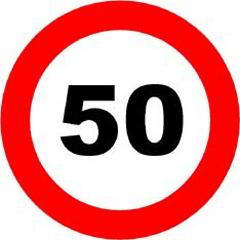
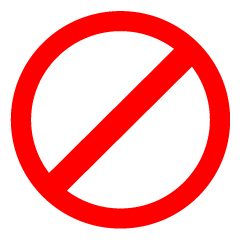
- Round + red border → Mandatory (prohibitory) sign. You must obey.
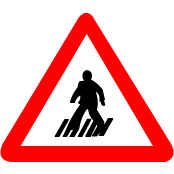
- Equilateral triangle (pointing up) + red border → Cautionary sign. A hazard or condition is ahead.
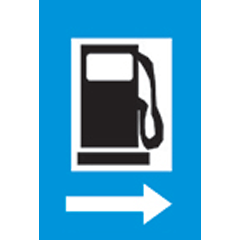
- Rectangle or square + blue background → Informatory sign. Useful information.
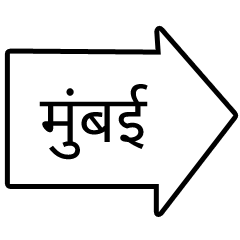
- Rectangle + white or green → Supplementary / direction sign.
Mandatory Signs
These are the most tested category. They command the driver to do something or prohibit an action:
- Speed limit — round, red border, white background, black number. E.g. '50' means max 50 km/h.
- No entry — solid red disc with a white horizontal bar. Vehicles may not enter.
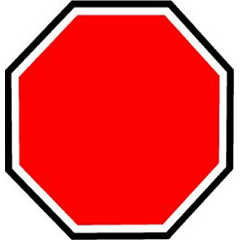
- Stop — octagonal, red background, white text. Must come to a complete halt.
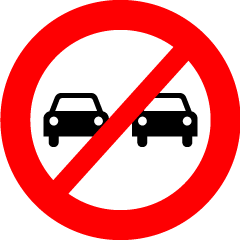
- No overtaking — two car silhouettes side by side, one red and one black, with a red slash.
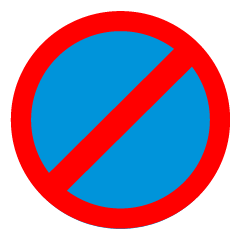
- No parking — white circle, red border, blue P with a red cross through it.
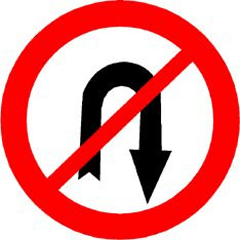
- No U-turn — curved arrow pointing left with a red diagonal bar.
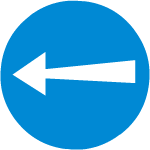
- Compulsory turn — round, blue background, white arrow. Must turn in that direction.
Cautionary Signs
Warning signs prepare you for a hazard ahead. The triangle shape is the tell. Common ones in the RTO test:
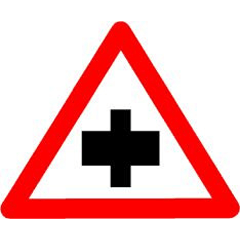
- Crossroads ahead — a simple plus sign inside the triangle
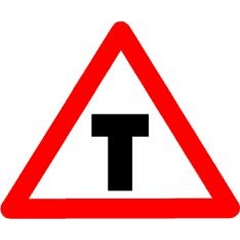
- T-junction — a T shape, can point left or right depending on road layout
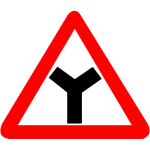
- Y-junction — three lines diverging from a point
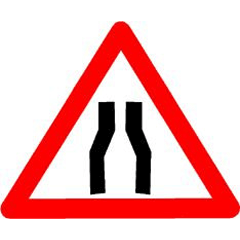
- Narrow road ahead — two vertical lines narrowing toward a point
- Pedestrian crossing ahead — human figure crossing between two lines
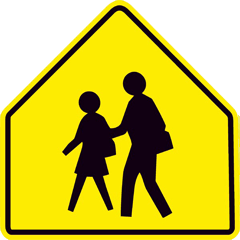
- School ahead — two children walking, or the text 'School'
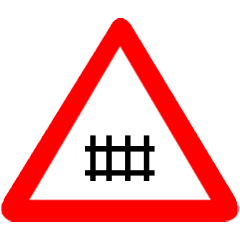
- Level crossing (unmanned) — two crossed lines inside the triangle
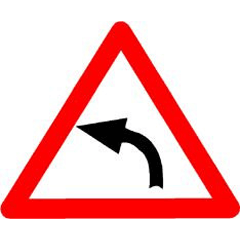
- Sharp curve / hairpin bend — a curved arrow inside the triangle
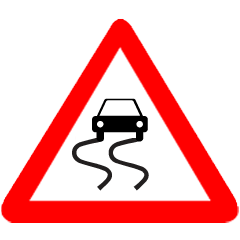
- Slippery road — a car skidding inside the triangle
Informatory Signs
These tell you where services and facilities are. Rectangle or square, usually blue background with white symbols:



- Hospital — white H on blue background
- Petrol pump — pump symbol on blue background
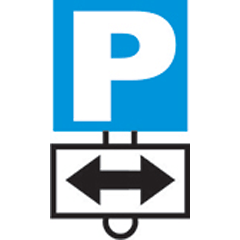
- Parking — white P on blue background
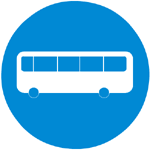
- Bus stop — bus symbol
- Tourist information — white 'i' on blue background
- First aid — red cross on white background (sometimes white cross on blue)
Signs That Confuse People
No entry vs. Stop
No entry is a red circle (disc) with a white bar — it applies to a road you cannot drive into at all. Stop is octagonal with ‘STOP’ text — it means halt at the line and wait. Different sign, different obligation.
No entry vs. Stop
No overtaking vs. No U-turn
Both have red slash marks. No overtaking shows two cars side by side with a diagonal slash. No U-turn shows a curved arrow (like a U) with a diagonal slash through it. Focus on what's behind the slash.
No overtaking vs. No U-turn
Crossroads vs. T-junction
Both are inside a cautionary triangle. Crossroads is a full plus sign (+). T-junction is a T shape — always check which direction the road branches. The junction shown in the sign matches the actual road layout ahead.
Crossroads vs. T-junction
Memory Techniques
- Red circle = 'STOP or RESTRICTED' — the red ring is a restriction ring
- Yellow/white triangle = 'WARNING' — a triangle pointing up is universally a warning shape
- Blue rectangle = 'INFORMATION' — blue is calm and informational in most traffic systems
- For prohibitory signs: picture the action, then put a red 'NO' circle around it
- Group signs into families: all speed limits look the same but have different numbers
- Recall by the hazard, not the sign: 'school crossing' conjures children, which makes the two-children sign memorable